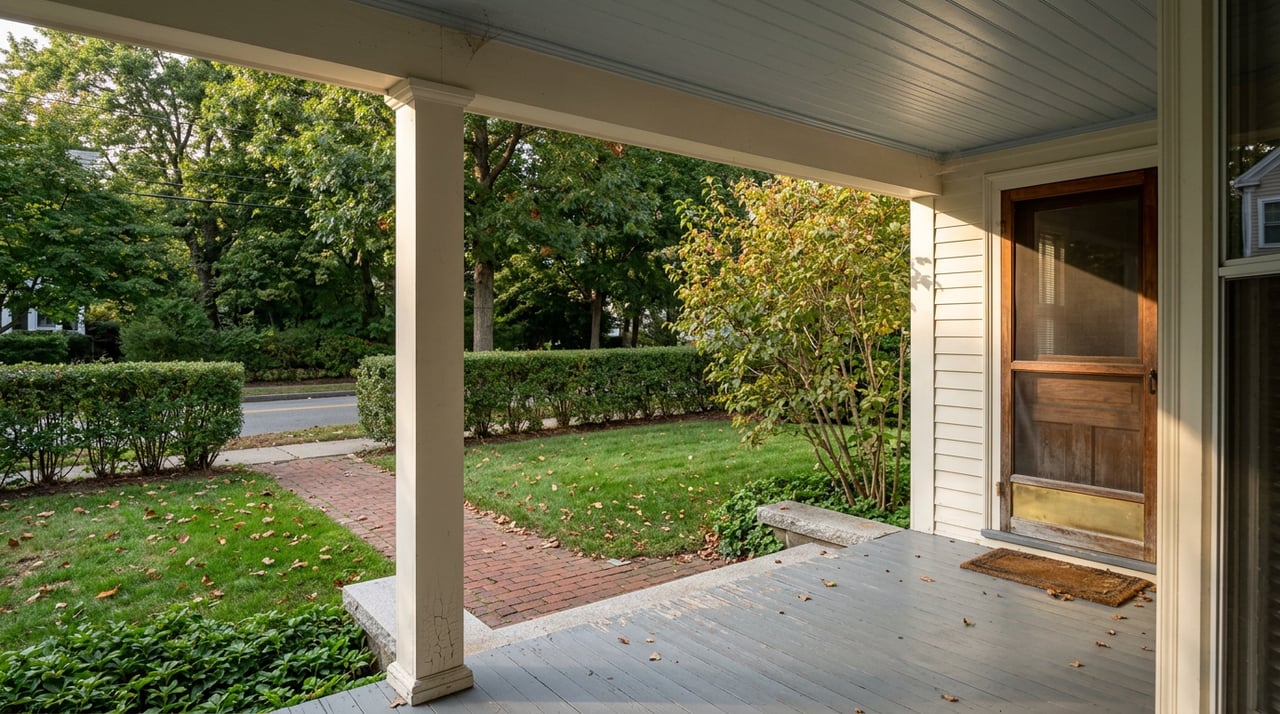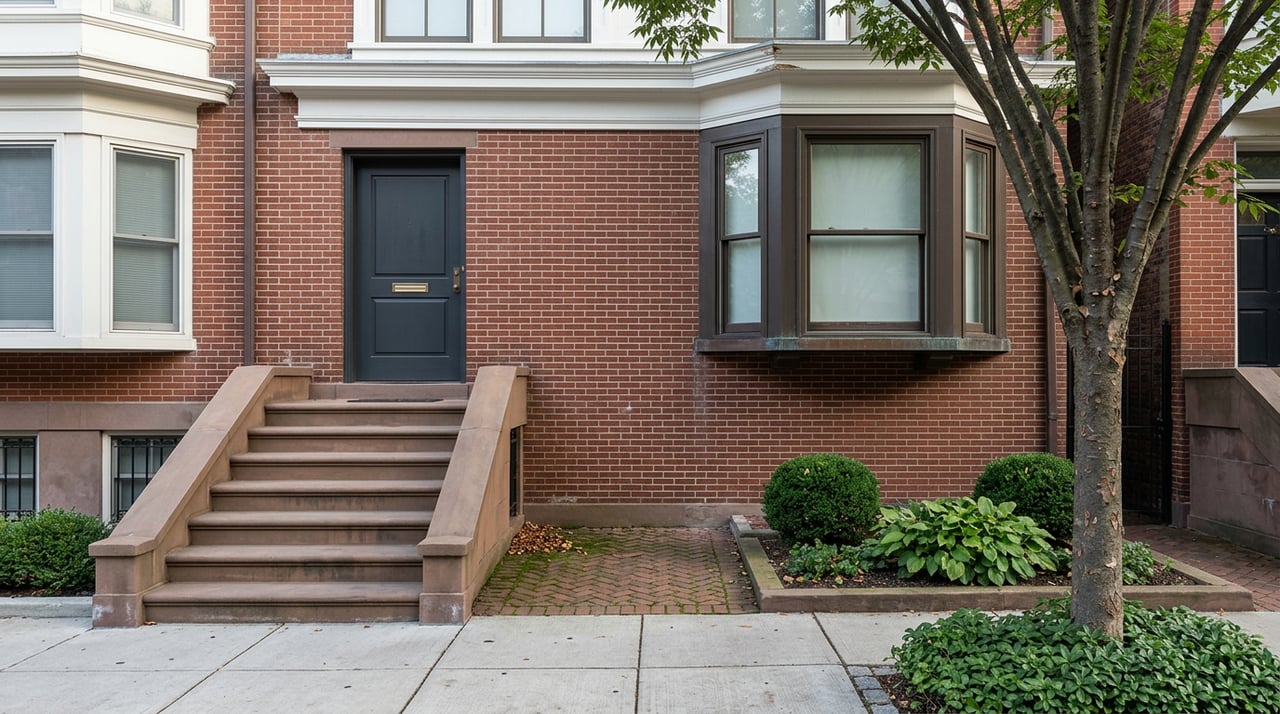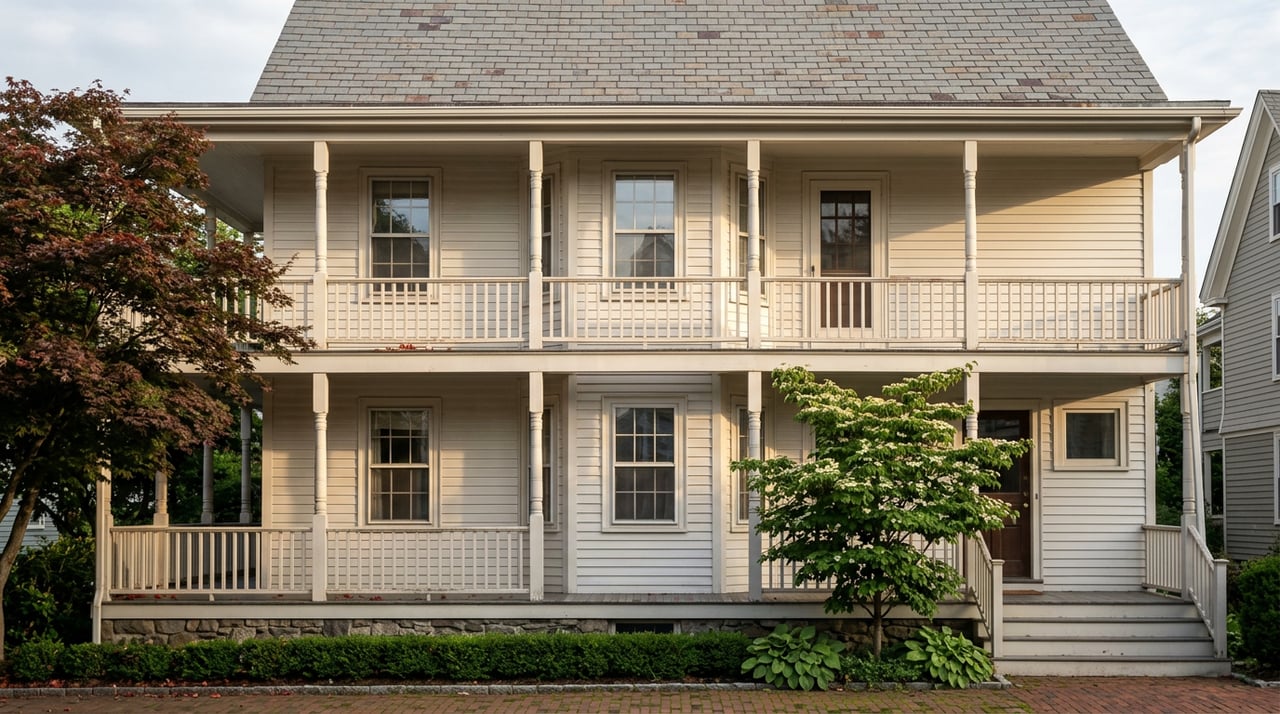
Run the numbers on 36 Alveston Street the way a rental investor would, and the deal falls apart before you finish the spreadsheet. The six-bedroom triple-decker on Alveston Street sold for $1,835,950 in the first quarter of 2026. Divide a realistic net operating income by that price and you land somewhere in the 4.5 to 5.5 percent range, which is what well-maintained Jamaica Plain triple-deckers have been trading at all year. A landlord chasing yield would walk away from that number without a second look. Yet 47 Prince Street sold for close to $1.8 million the same quarter, multi-family pendings in JP were up 111 percent year to date as of late April, and buildings like these are still moving with 19 deals under contract compared to 9 a year earlier.
If the cap rate looked bad and the buildings kept selling anyway, either every buyer in Jamaica Plain is bad at math, or the cap rate was answering a question nobody in that bidding war was actually asking.
The math that doesn't explain the bidding
A cap rate tells you what a building is worth to someone who plans to hold it as a pure income asset: buy with a large down payment, collect rent, and measure success in yield. That is not who is winning most triple-decker bids in Jamaica Plain right now. The three-unit multi-family remains the closest thing the neighborhood has to a gold-standard investment vehicle, and buildings in this category typically trade between $1.6 million and $2 million, but the return profile only makes sense once you stop treating it as a cash flow story and start treating it as an appreciation and equity story. That distinction matters because appreciation alone still doesn't explain why a buyer with full information would outbid a rational investor on a 4.5 percent asset. Something else has to be doing the work.
Two different loans for the same building
The something else is financing, and it splits the buyer pool into two groups facing two entirely different sets of terms for the identical property.
A buyer purchasing a triple-decker as a pure investment, with no intention of living in it, is underwritten as a commercial-style acquisition. Conventional guidelines typically require 15 to 25 percent down for that buyer. Every dollar of that down payment has to come from savings, and the lender is not going to give much credit for rental income the buyer hasn't yet collected.
A buyer who plans to occupy one unit and rent the other two is underwritten as a residential borrower, not a landlord. FHA allows an owner-occupant to buy a 2-to-4 unit property with as little as 3.5 percent down. For a $1.8 million triple-decker, that is the difference between needing roughly $63,000 at closing and needing $270,000 to $450,000. The same lender will also count a meaningful share of the projected rent from the other two units toward that buyer's qualifying income. Where the buyer lacks lease history, FHA typically counts 75 percent of appraiser-supported market rent, and for 3-to-4 unit properties it layers on a self-sufficiency test under HUD's Single Family Housing Policy Handbook, comparing that adjusted rental income against the building's total housing payment. In 2026, FHA's high-cost-area loan limits reach $1,581,250 for a two-unit property and $2,402,625 for a four-unit property, which covers the bulk of what triple-deckers in this price band actually cost.
| Pure investor (no occupancy) | Owner-occupant (lives in one unit) | |
|---|---|---|
| Typical down payment | 15% to 25%, conventional | As low as 3.5%, FHA |
| Rental income counted toward qualifying | Limited, often requires established lease history | Yes, typically 75% of appraiser-supported market rent |
| Extra underwriting layer | Standard investment property review | Self-sufficiency test on 3-4 unit properties per HUD Handbook 4000.1 |
| Loan limit in 2026 (high-cost area) | Commercial-style terms vary by lender | Up to $1,581,250 (2-unit) or $2,402,625 (4-unit) |
That gap is not a rounding error. It is the reason an owner-occupant can pay a price that produces a mediocre cap rate on paper and still come out ahead, because the owner-occupant isn't financing the whole building at investor terms. They are financing a home, with two paying roommates attached, at residential terms a pure investor cannot access.
What this looks like on the ground in Jamaica Plain
Triple-deckers cluster most densely near the Stony Brook and Forest Hills Orange Line stops, and that concentration is exactly where the owner-occupant strategy shows up most often, because those buildings sit at a price point where the FHA math works cleanly against local rents. A fully rented triple-decker in Jamaica Plain can generate $7,500 to $10,000 or more a month in gross rent, and for an owner living in one unit, that offset can cover a significant share of the mortgage from day one. As tenants turn over and rents get marked to current market rates, the entry cap rate on a building bought at 4.5 percent can work its way toward 6.5 percent or higher over three to five years, which is the appreciation-plus-rent-growth thesis that pure yield math misses entirely.
The single-family side of Jamaica Plain tells a different story because it isn't subject to the same financing wedge. The top single-family sale of the first quarter was 11 Robinwood Avenue, a five-bedroom, 3,390-square-foot home in the pocket between the Arboretum and Pondside, which closed at $2,385,000. There is no rental income to count there, no self-sufficiency test, just a buyer competing on price against other buyers who all face the same conventional terms. That is part of why single-family inventory in JP has stayed critically thin, with only 7 active listings as of late April 2026 compared to 11 a year earlier and closer to 20 two years before that.
For buyers looking at where the multi-family financing wedge still has room to run, the Jackson Square area sitting on the JP-Roxbury border remains one of the few pockets where pricing hasn't fully caught up to what the financing math supports, largely because continued infrastructure investment there hasn't yet been priced in the way it has closer to Centre Street.
What this means if you're comparing a condo instead
If you're weighing a Jamaica Plain condo against a triple-decker, the financing wedge doesn't apply to you the same way, and that is useful information in itself. A condo purchase is a single-unit residential loan regardless of whether the buyer plans to live there or rent it out, so there's no rental-income boost and no self-sufficiency test layered on top. What you're paying for is closer to straight per-square-foot value, and in Jamaica Plain that has been running $640 to $700 per square foot as of spring 2026, with condos generally starting in the $600,000s. Year to date through June 2026, the average condo sale in JP closed at $803,000 across 95 closed sales, up from $772,000 over the same period a year earlier, with the average sale landing at 101.4 percent of list price and roughly 31 days to offer. That is a market moving on its own steam, not on a financing subsidy.
It also means a condo comes with a simpler ownership structure. A triple-decker landlord carries one policy covering the whole building. A condo owner carries individual coverage while the association maintains a master policy, and the association, not the individual owner, is responsible for the building envelope. For some buyers, that trade of upside for simplicity is exactly the point.
A few questions worth asking before you write an offer
Does the financing advantage disappear if I buy a two-unit instead of a three or four-unit? The self-sufficiency test under HUD's handbook only applies to 3-to-4 unit properties. A two-unit purchase still gets the low down payment and the rental income credit, just without that extra layer of underwriting.
Can I still get FHA terms if I don't plan to stay in the unit forever? FHA requires owner-occupancy at the time of purchase and typically for at least a year, but plenty of buyers move on after that window while keeping the property as a rental, so the exit path matters as much as the entry terms.
Does this same math work for a condo I plan to rent out? No. A rented condo is financed on its own as a single unit, without the multi-unit rental income credit that makes the triple-decker math work the way it does.
Numbers like these only mean something when they're run against an actual building on an actual street, not a neighborhood average. If you're trying to figure out whether a specific Jamaica Plain triple-decker pencils out for your situation, or whether a condo makes more sense given how you plan to finance it, the team at M|E Collective can walk through the math with you block by block. Book an appointment and bring the listing.