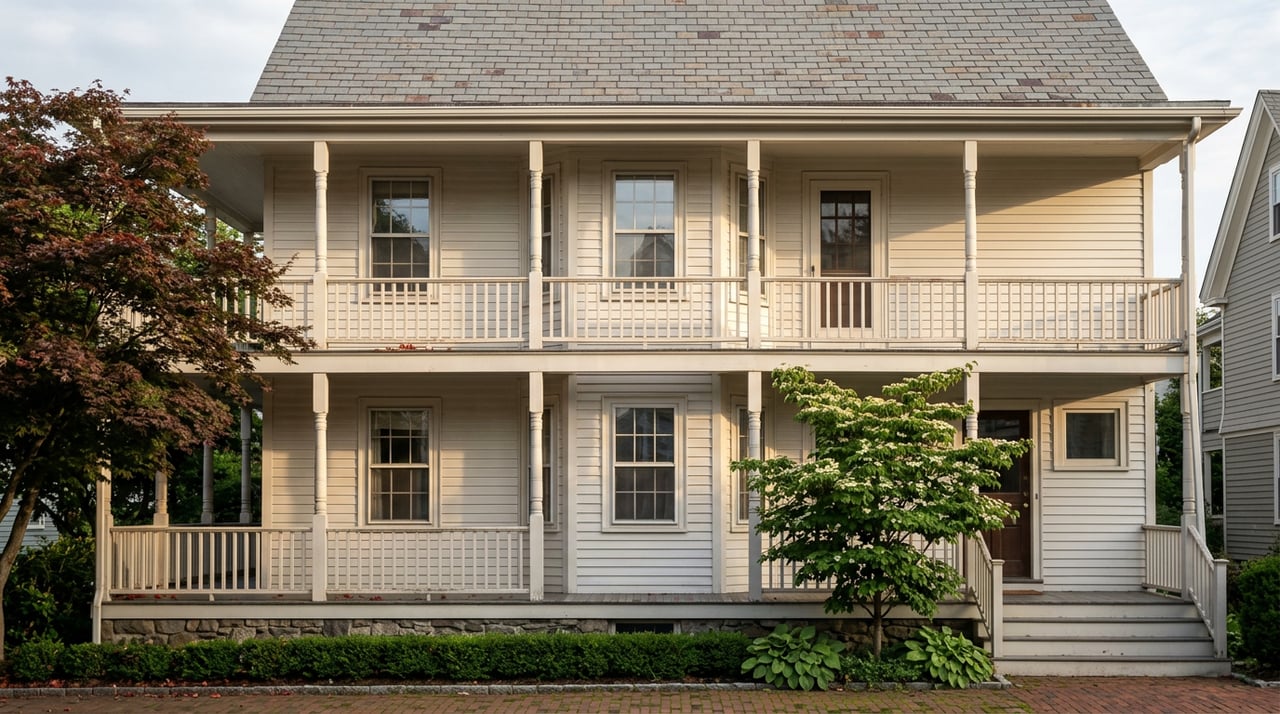
A real estate developer and broker is currently being sued by the town she lives in over five windows.
The case involves a house at 179 Babcock Street, inside Brookline's Graffam-McKay Local Historic District. In 2021, the owner replaced five windows on the front of the building without getting approval from the town's Preservation Commission first. That single step, skipped, has since produced two denied retroactive applications, a formal correction order for specific wood-framed replacement windows, a missed compliance deadline, and, as of January 2026, a lawsuit filed in Norfolk Superior Court. The owner has said estimates to correct the windows now run past $50,000.
Most people who buy a house in Brookline never think about the Preservation Commission until they're already standing in front of it, permit application in hand. That's the part worth understanding before you write an offer, not after your inspection contingency expires. Being inside one of Brookline's nine Local Historic Districts doesn't restrict what the house looks like on the day you buy it. It restricts what you're allowed to do to it every day after.
The rule itself is simple. The consequence is not.
Brookline's Historic Districts By-Law states plainly that no building or structure inside a Local Historic District can be constructed, demolished, moved, or altered in any way that affects its exterior architectural features without the Preservation Commission first issuing one of three documents: a Certificate of Appropriateness, a Certificate of Non-Applicability, or a Certificate of Hardship. The Building Inspector is barred from issuing a permit until one of those certificates exists. This isn't a design suggestion layered on top of the normal permitting process. It's a legal precondition to the permitting process, and it applies to anything visible from a public street, way, or park.
The fees are modest on paper. A Certificate of Appropriateness runs a minimum of $50, scaled at $2 per $1,000 of estimated project cost. A Certificate of Non-Applicability costs $20. But if you do the work first and apply for the certificate after the fact, as the Babcock Street owner did, the fee triples, and the Commission can order the work undone or redone to match its design guidelines regardless of what you already paid a contractor. Appeals don't go to a local zoning board. They go to Superior Court.
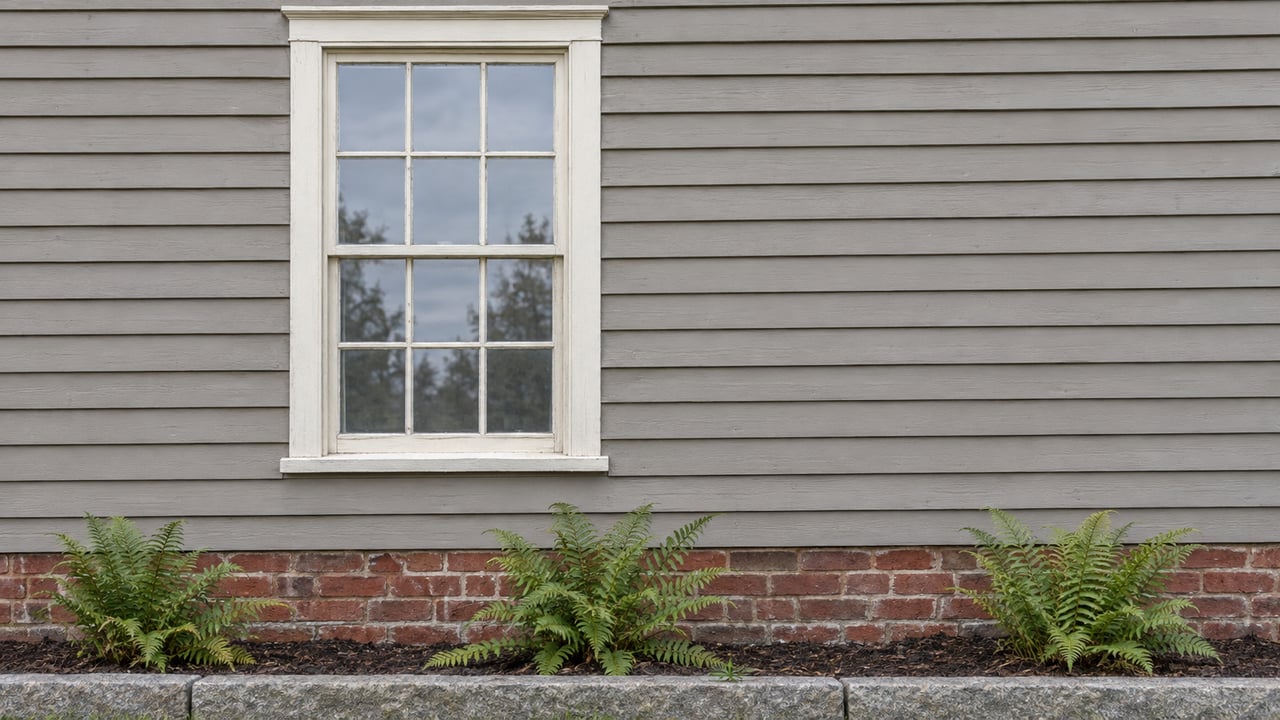
The Babcock Street timeline shows what that actually looks like in practice: windows replaced in 2021 without a certificate, a retroactive application denied in 2022, a second application for a cheaper alternative also denied, a Certificate of Appropriateness eventually issued ordering specific 6/1 single-lite, true-divided-light wood windows, a March 2025 follow-up finding the correction still incomplete, and Select Board authorization to sue that October. The town filed suit that January. Four years after the original windows went in, the case was still open and the windows were still non-conforming.
Nine districts, not one, and they don't all look the way you'd expect
Brookline currently recognizes nine Local Historic Districts, established over more than four decades:
| District | Established |
|---|---|
| Cottage Farm | 1979 |
| Pill Hill | 1983 |
| Graffam-McKay | 2004 |
| Chestnut Hill North | 2005 |
| Harvard Avenue | 2005 |
| Lawrence | 2011 |
| Wild-Sargent | 2012 |
| Crowninshield | 2015 |
| Olmsted-Richardson | 2022 |
Some of these read the way most people picture a historic district: a dense, contiguous stretch of streets with a shared architectural character. Cottage Farm, the oldest, grew out of land developed by industrialist Amos Lawrence starting in 1850, and its concentration of large-lot 19th and early 20th century houses is visually obvious the moment you turn onto Ivy or Essex Street.
Olmsted-Richardson, the newest, works differently. It's a noncontiguous, thematic district covering four specific addresses on Cottage and Warren Streets, plus a grave marker in Walnut Hills Cemetery, chosen because of their direct association with landscape architect Frederick Law Olmsted and architect H.H. Richardson. Olmsted's home and office at 99 Warren Street, known as Fairsted, and Richardson's former home at 25 Cottage Street are both inside the district. A house two doors down from either address may not be. That distinction matters for a buyer, because "historic district" in Brookline doesn't always mean "the whole block looks old." Sometimes it means one specific address on an otherwise unremarkable street carries a review requirement its neighbors don't.
What actually gets reviewed, and what doesn't
The scope of Commission review is narrower than most buyers assume in one direction and wider than they assume in another.
Paint color itself is not reviewed. If you want to repaint a shingled or clapboard house that's already painted, the Commission doesn't weigh in on your color choice. But the first-ever application of paint or stain to a previously unpainted surface, such as bare masonry or untreated shingles, does require review, and any change to roof color is reviewable regardless of the surface's paint history.
General landscaping is largely outside the Commission's authority. Fixed landscape structures are not: swimming pools, built-in grills, outdoor kitchens, fireplaces, playhouses, and pergolas all require a certificate, and the guidelines direct that these be sited toward the rear of the property or otherwise kept minimally visible from the street.
Solar panels sit in a gray zone that's become more relevant as more homeowners look to add them. The design guidelines direct that renewable energy systems shouldn't be visible from a public way, park, or body of water where that's practical, and where it isn't, the system shouldn't obscure historic features or significantly change the building's profile. Real cases show how this plays out. In January 2024, an application for a rooftop solar array at 104 Walnut Street in the Pill Hill district was continued because supporting materials hadn't been uploaded for that hearing. In April 2024, a solar array application for 128 Crafts Road in the Chestnut Hill North district was withdrawn by the owner immediately before the scheduled hearing. Neither outcome was a flat denial, but neither was a same-day approval either. Getting solar approved in one of these districts is a process with a timeline, not a checkbox on a permit form.
What this means before you make an offer
None of this should read as a reason to avoid these neighborhoods. Brookline's Local Historic Districts protect some of the town's most architecturally distinctive housing stock, and plenty of owners inside them complete renovations, additions, and even solar installations every year through the certificate process without incident. The Preservation Commission's own guidelines encourage a preliminary consultation with staff before you submit anything, specifically so a homeowner isn't surprised by what the review actually requires.
The point is timing. If you're considering a house in Brookline and you already know you'll want to replace windows, add a dormer, put in a pool, or install solar within a few years of closing, that plan belongs in your due diligence before the offer, not after the inspection period ends. Confirming whether a specific address sits inside one of the nine districts, and if so, reviewing the design guidelines that apply to it, tells you what you're actually buying into. The Babcock Street case is a reminder of what happens when that step gets skipped: a routine window job becomes a four-year dispute with a $50,000 correction estimate attached.
A few questions worth asking before you close
Is every old house in Brookline inside a Local Historic District? No. Brookline also has 16 National and State Register Districts and more than 80 individually listed properties, which carry different protections than the town's nine Local Historic Districts. The distinction matters because Local Historic District status is what triggers the Certificate of Appropriateness requirement before a building permit can issue. National Register status alone typically doesn't.
Can I find out if a specific house is inside one of these districts before I make an offer? Yes. The town maintains a historic district map and individual district pages through its Planning and Community Development office, and Preservation Commission staff will do a preliminary consultation on a specific property before you submit any application.
What if the seller already did work without a certificate? Ask. An uncorrected violation can attach to the property, not just the previous owner, and the Babcock Street case shows the town will pursue correction years after the original work was done.
If you're weighing a purchase inside one of Brookline's historic districts and want to understand what a specific address does and doesn't allow before you write an offer, M|E Collective can walk through it with you. Book an appointment before your next Brookline showing.